
Thanks For The Memories
Pensado’s Place, Side B, and new media: the online legacy of an influential mix engineer.

I.
There are no stars in audio, despite Big Software’s throbbing desire to make it so. Corporate behemoths like Waves Audio promote lines of tools branded with the names of elite mix engineers: “Chris Lord-Alge,” “Jack Joseph Puig,” and “Tony Maserati.” But even those most deluxe-sounding names draw blank stares from the average music fan—or worse.
It’s a niche world, audio engineering, and, fame-wise, its practitioners are dwarfed by their closest relatives: record producers. Still, for the past 15 years, one engineer has flown rather close to the sun. His name is Dave Pensado. And, in fact, “audio engineer” is too broad a description for him. More precisely, he’s a mixer. And in the context of the record-production pipeline, mixers belong to the finisher class.
II. Background: How Records Are Made
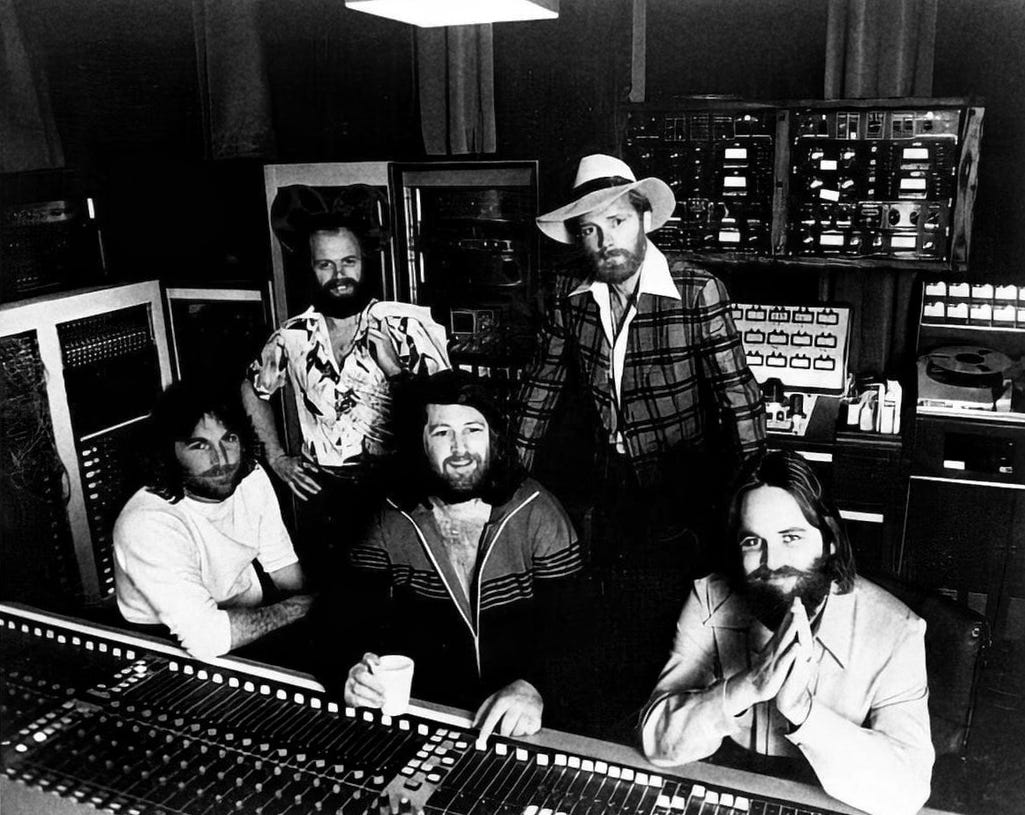
Traditional record production goes something like this: first, a songwriter writes lyrics and puts them to a melody. Then, band members—or hired musicians and/or producer(s)—arrange a musical accompaniment. Next, they book a recording studio, where tracking engineers arrange microphones to record instruments and vocals into a console. If a producer’s involved, they supervise. (It’s a vague term, “supervision,” but, in practice, it often sounds like “OK, one more take,” “try chest voice in the chorus,” or “uhhh, let’s sing the right song this time, brother.”)
With the final performances recorded and, ideally, saved in multiple locations, a mixer (AKA “mix engineer”) enters the picture. In the distant past, this might have been at the behest of a record label, but, today, amateur music makers and chart toppers, alike, tend to work with them directly. Talent will occasionally sit in on the process—known as an “attended session”—but most mixers prefer to work alone. Typically, it’s more efficient for musicians to take their celebratory bong hits, snorts of dust, or Tecate enemas back at home, rather than in the control room, where they might feel inclined to offer real-time, stream-of-thought input, e.g., “Can we make the bongos flame out a little more?”
In theory, mixing is simple. It’s an art of balance. A subjective one, of course, and, historically, it’s been the penultimate step in the record-production process, followed only by mastering. Among the types of questions mixers ask:
How loud should each musical part be?
Are the vocals clear across each section?
Does the keyboard arpeggio overwhelm the glockenspiel motif?
Is there a buildup of five kilohertz in the chorus?
How dark can the stack of background singers be before it turns into mush?
Does it make sense to pan the violin hard into the left speaker and the piano hard into the right?
What about the opposite?
How loud can the volume of the entire mix be turned up before it starts to pierce the ear?
And so on.
Insofar as a mix engineer is not a producer, one of their specialties is to produce a lot of questions. And, as such, the line between mixer and producer is blurrier than ever. What, 25 years ago, may have been considered mixing—like decisions about delay and other time-based effects—are now the regular domain of producers. And many contemporary producers are capable of “rough mixes” that would have qualified as “release-ready” in prior decades. We can thank music software for that.
III. A brief history of the Digital Audio Workstation (DAW)
DISCLAIMER: For the sake of brevity, this is not an exhaustive history, and it skews recent. For a more detailed account, check out Dawn of the DAW by Adam Patrick Bell.
In the early 1980s, a musician-engineer team in Germany founded Steinberg Research, which would release a proto version of the digital audio workstation (DAW), Cubase—“the godfather of computer music.” Around the same time, two other companies brought to market competition that would define modern record production. One, called Emagic—later acquired by Apple—released a program that would become Logic. Another, Digidesign—eventually renamed Avid—released Sound Tools, which matured into the venerable Pro Tools.
In the 1990s, as Apple computers became more powerful, so too did music software. By the end of the decade, the “digital revolution” had made Pro Tools standard in commercial studios—along with the computer whizzes needed to operate it.
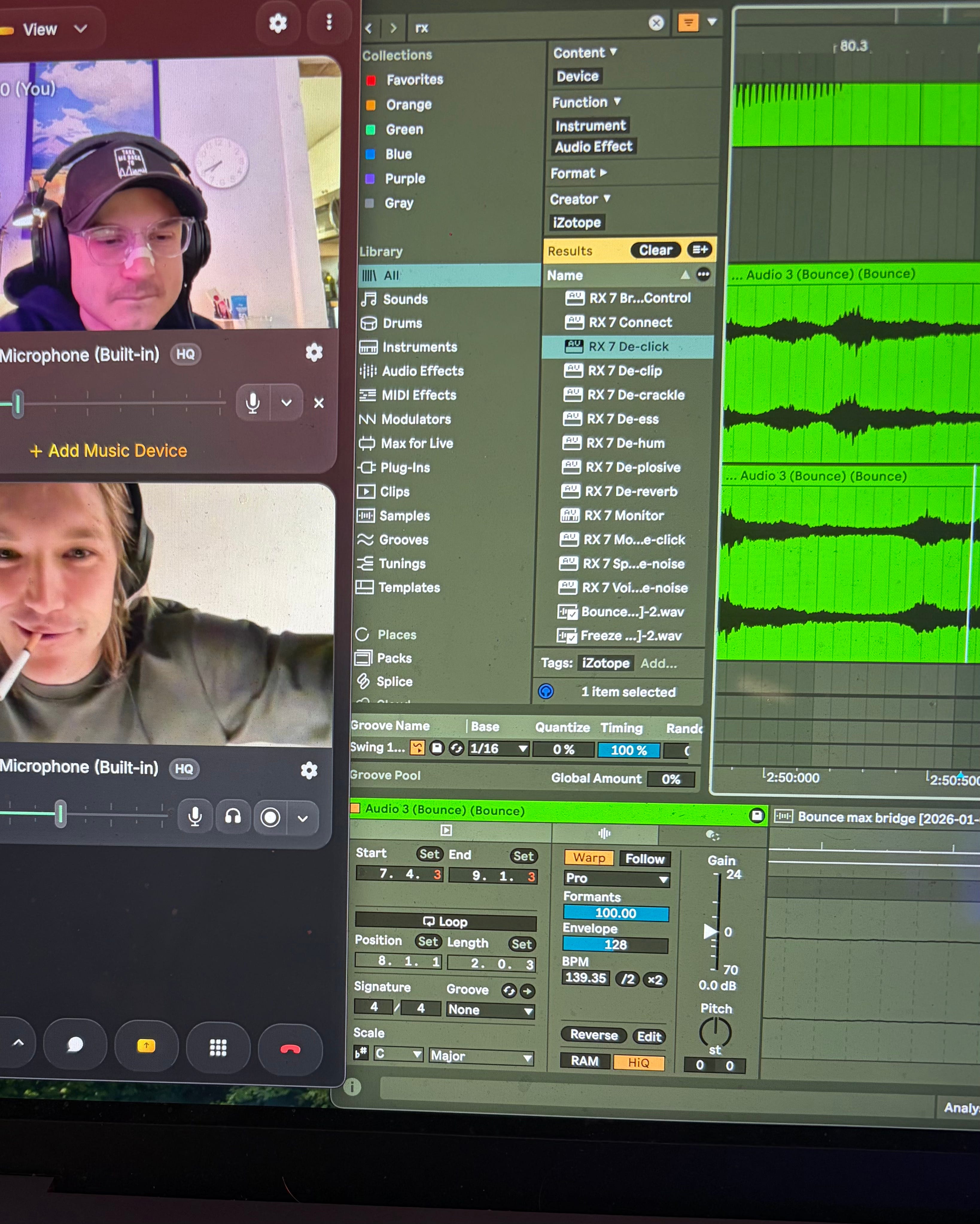
Plenty has been written about Pro Tools’ influence on recorded music, but, in the second half of the ’90s, two other pieces of nascent-yet-consequential software emerged: Ableton Live and FL Studio. Though Live wouldn’t receive a commercial release until 2001, its original developers created a prototype for personal use as early as 1995. Unlike Pro Tools, Live imagined music makers as its user base, rather than strict audio engineers. It had all the features you’d expect on a hardware recording console, but its non-linear workflow and robust looping functionality reflected a commitment to musical creativity. Around the same time, Fruity Loops—a program that would later rebrand to FL Studio,1 made by Belgian company, Image-Line—offered a more traditional take on the digital-music-sequencer-meets-console-recording environment. It, too, favored music makers, thanks to its friendly interface and even friendlier price point.
Prior to the digital revolution, there was an implicit distance between the roles in the record-production chain. Bandmembers or producers might contribute songwriting ideas and vice versa, but, for the most part, engineers engineered, producers produced, players played, and so on. Rare was the vocal artist who veered into mix engineering—or even recorded their own performances. Those who blended roles, especially across engineer-artist lines, were often considered pioneers.
By the second half of the ’90s, DAWs enabled users to touch more parts of the record-production process than ever. One of the crucial developments was the invention of Virtual Studio Technology (or VST) in 1996. It allowed software developers to make digital versions of instruments, effects, and samplers that had only existed as hardware in previous decades. Once downloaded, users could launch them standalone, or in their DAW of choice.
Of the major DAWs, Cubase, Logic, Live, and FL Studio would integrate VSTs most gracefully, thanks to their fluid MIDI (Musical Instrument Digital Interface) architecture. As a consequence, creative individuals could program music as well as their predecessors could play it. Traditional musicianship and the art of capturing pristine recordings became less important than they had been before. Digital production elevated ears—and a determination to figure it out—to near parity with chops. There were other DAWs along the way, like Impulse Tracker, Reason, Bitwig, Reaper, and Sonar, but, from the turn of the century on, Cubase, Logic, Live, FL Studio, and Pro Tools would be most common in rooms where Top 40 hits were made.
IV. DAWs Take Over Chart Music
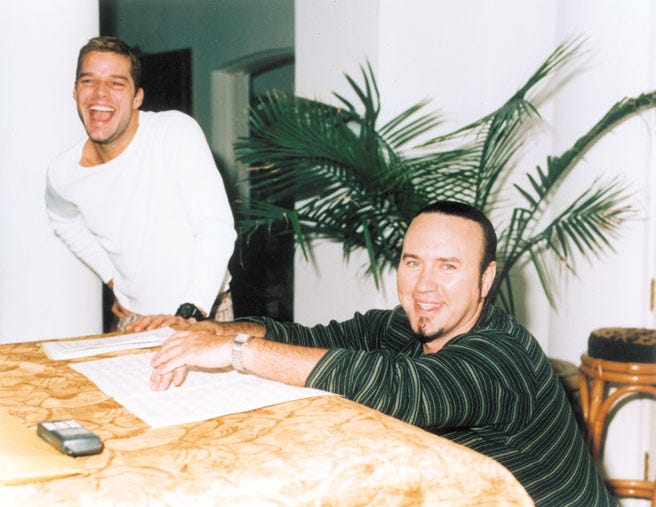
The first number-one record made entirely “in the box” (meaning: on the computer—Pro Tools, in this case) was Ricky Martin’s “Livin’ La Vida Loca,” in 1999; a point of no return, as far as pop was concerned. Produced by Desmond Child, “Livin’ La Vida Loca” leaned on the digital, cut-and-paste type of construction that made production and engineering look less like cousins and more like fraternal twins. By this time, every stage of the record-production process, from ideation to polish, could take place inside a single computer program. After 2000, artists could seamlessly slip into the musician-engineer mode that once required a room full of gear and instrumental expertise.
By the mid-to-late aughts, a teenager with FL Studio, a pair of headphones, and a free afternoon could produce chart-worthy results—and they did.2 Of course, much of the music at the top of the charts continues to be made by teams, but, across the board, roles are often more composite than not.3
With music makers at a new height of self sufficiency, the traditional record-making model came under threat. A process that had once been divided into discrete roles—writer, musician, tracking engineer, mixer, etc.—became the domain of fewer and fewer people. What was once a corporate enterprise—the studio—began to look more like a cottage industry, and the pipeline process started to resemble a pool; everyone could splash around in parallel. Which, of course, raised existential questions for music-and-audio professionals.
Why hire instrumentalists when one person could program drums, write melodies, create their own sounds, and record their own vocals—all in the box, and from their bedroom? And, when that same person could blend musical parts to their exact taste, why hire an engineering specialist to mix those parts? Questions like these haven’t disappeared, but a number of industry stalwarts managed to hang on. Among them was Dave.4
V. Pensado’s Place: One Engineer’s Journey Into New Media
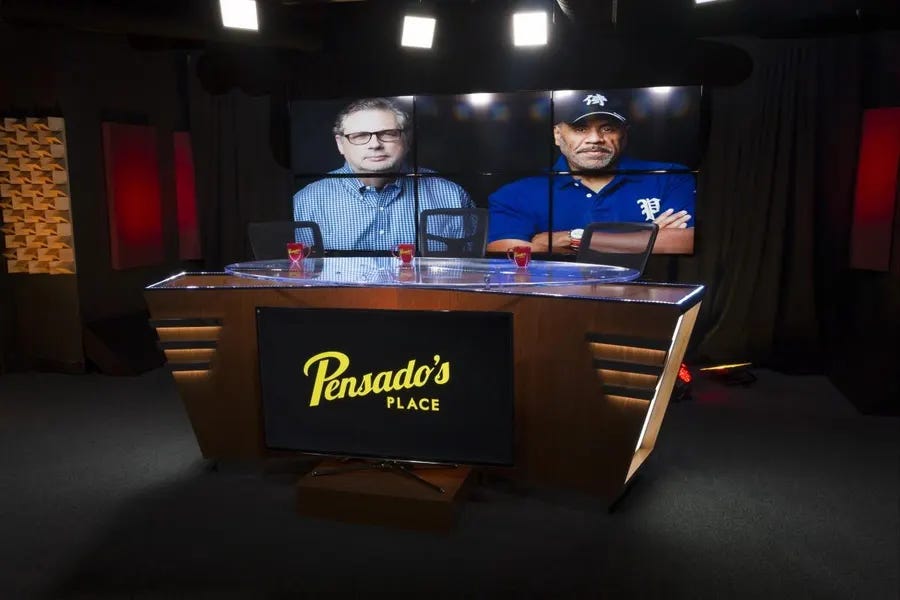
By the early 2010s, Dave was well into his third decade in the traditional studio system, and he had all the markers of conventional success. His mix credits read like a who’s who of mid-2000s pop and R&B radio, from Justin Timberlake to The Black Eyed Peas to Beyoncé, Mariah Carey, Mary J. Blige, Shakira, Christina Aguilera, Justin Bieber, Ne-Yo, and more. He went to work from North Hollywood’s Larrabee Sound Studios, a prestigious symbol of pre-2005 music-business success. Hundreds of millions of people had heard his work through radio, TV, film, and streaming.
For most engineers, a single hit is enough to stay the course. But Dave was on the precipice of what would become the most influential pivot of his career. Up until that point, industry insiders were the only ones likely to know the Pensado name. That changed in 2011, when Dave and his manager, former professional Canadian football player, Herb Trawick,5 launched a YouTube show they called Pensado’s Place, which catered to an emerging market: aspiring audio engineers.
By modern podcast standards, Pensado’s Place was a clumsy attempt at an educational audio-engineering talk show. Manager and client—neither a natural on screen—sat across from one another on a set fit for ESPN. Both tried banter, but it was often unclear who was in on the joke. Segues were awkward. And when they brought in guests, conversation sputtered like a date stuck in first gear. Sometimes, you got the sense that Herb was more interested in the spotlight than Dave. Other times, he had no choice but to take the reins—Dave was a professional listener, after all. And, on those episodes where Dave would rather have been mixing, you could tell.
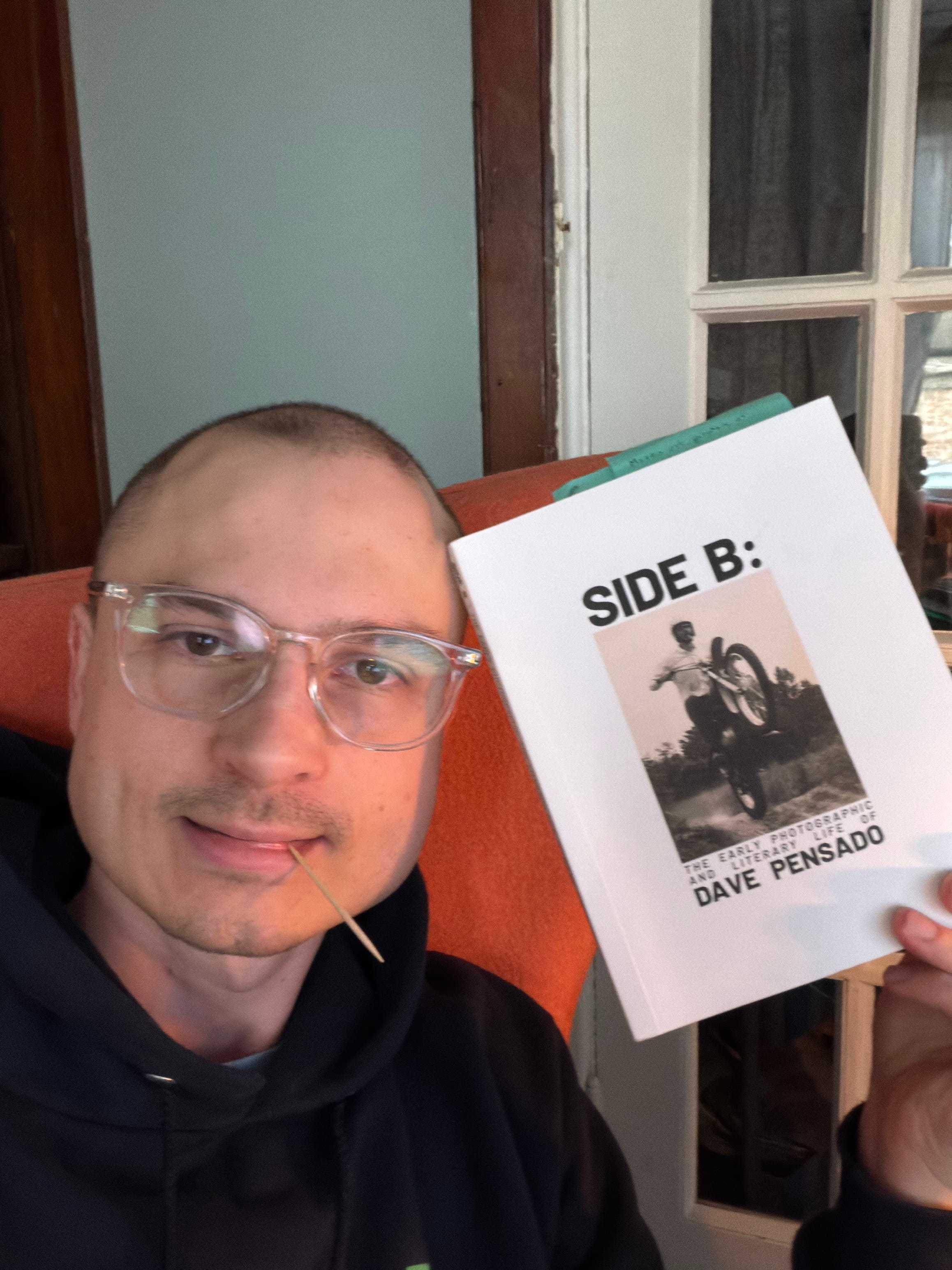
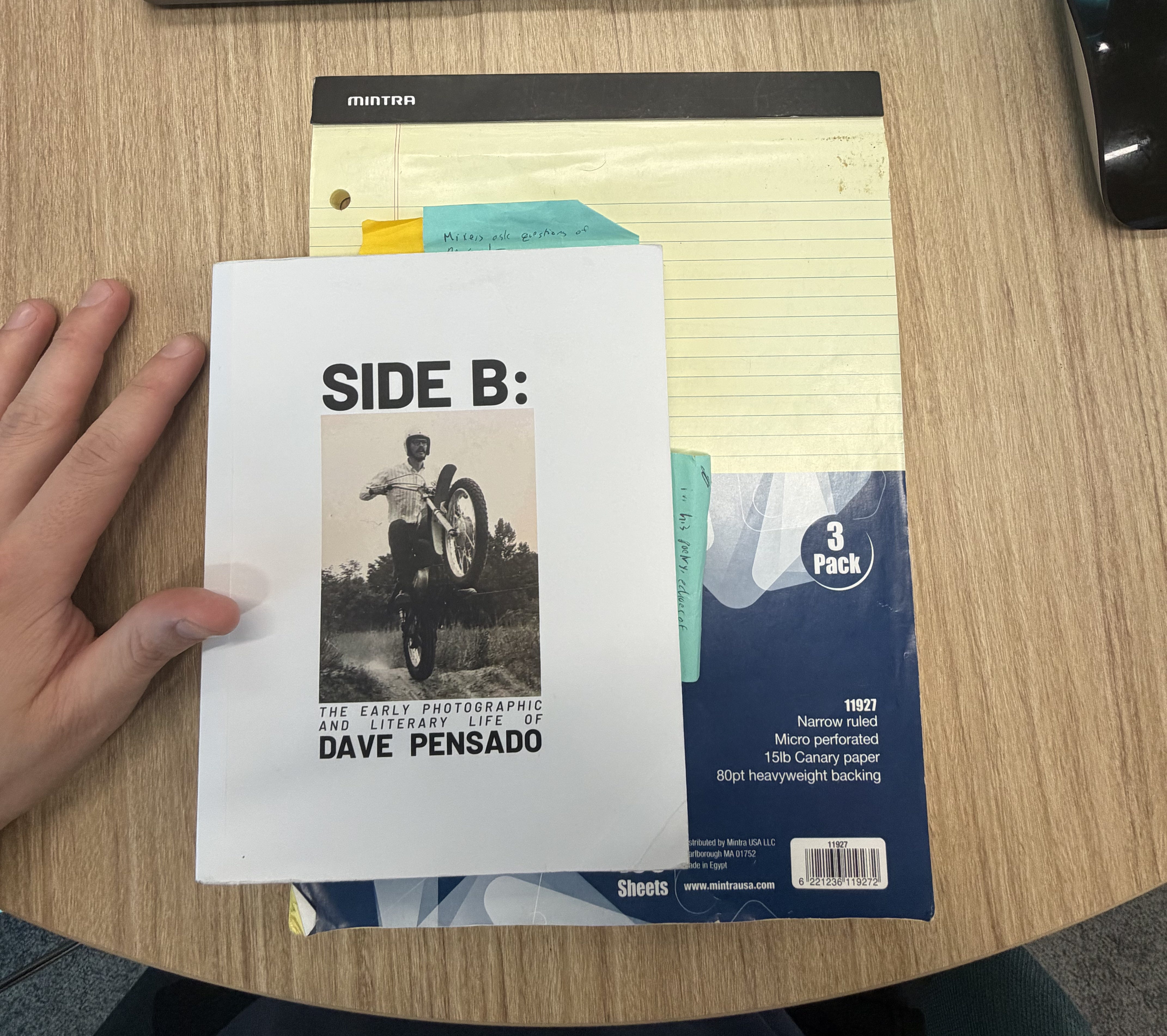
Perhaps it’s no surprise, then, that Pensado’s daughter, Melissa McGaughey, selects this quote of her father’s to open Side B: The Early Photographic And Literary Life of Dave Pensado, a retrospective of Dave’s pre-LA creative work from late ‘80s Atlanta:
“The success, the hits, the fame and notoriety are all an outgrowth of the thing I truly love, just sitting in a quiet and safe room.”
- Dave Pensado
Such is the irony of a life in mixing. Quiet rooms enable mixes that bang loud in the club; mixers work with speakers, yet eloquence often eludes them; their work is necessarily reclusive, yet it requires collaboration with enormous amounts of people.
To the credit of Pensado’s Place, it championed an altruistic philosophy—“give knowledge away for free”—before marketers embraced edutainment as a means to sell music software. Prior to the 2010s, behind-the-scenes music professionals rarely shared their screens, lest they divulge one of the “secrets” to their sound. Pensado’s Place, on the other hand, made screen shares and technical tell-alls pillars of its content. Plus, it invited professionals from lesser-known corners of the music business as guests, especially those who the broader entertainment industry might have deemed too dull—or too nerdy—for airtime: sound designers, vocal producers, songwriters, managers, studio owners, and more.
Inevitably, plenty of those interviews suffered from a stilted quality. For example, Dave led an engineering segment called “Batter’s Box,” where he floated music concepts and asked interviewees to respond in short.
“Kick drum,” Dave might say.
“LA-2A,” a mixer would respond, in reference to a well-known audio compressor.
“Vocals,” pitches Dave, reading from a note card.
“Loud,” replies his guest.
Pedagogic, hardly. Exchanges that elicited gear-oriented answers missed an opportunity to explore the convergence of music, science, and culture—an intersection that makes record production unique. However, this isn’t to say Pensado’s Place was a failure. In fact, its greatest contribution was the way it exposed the humanity of an otherwise tech-dominated profession.
VI. The Hand That Turns The Knobs
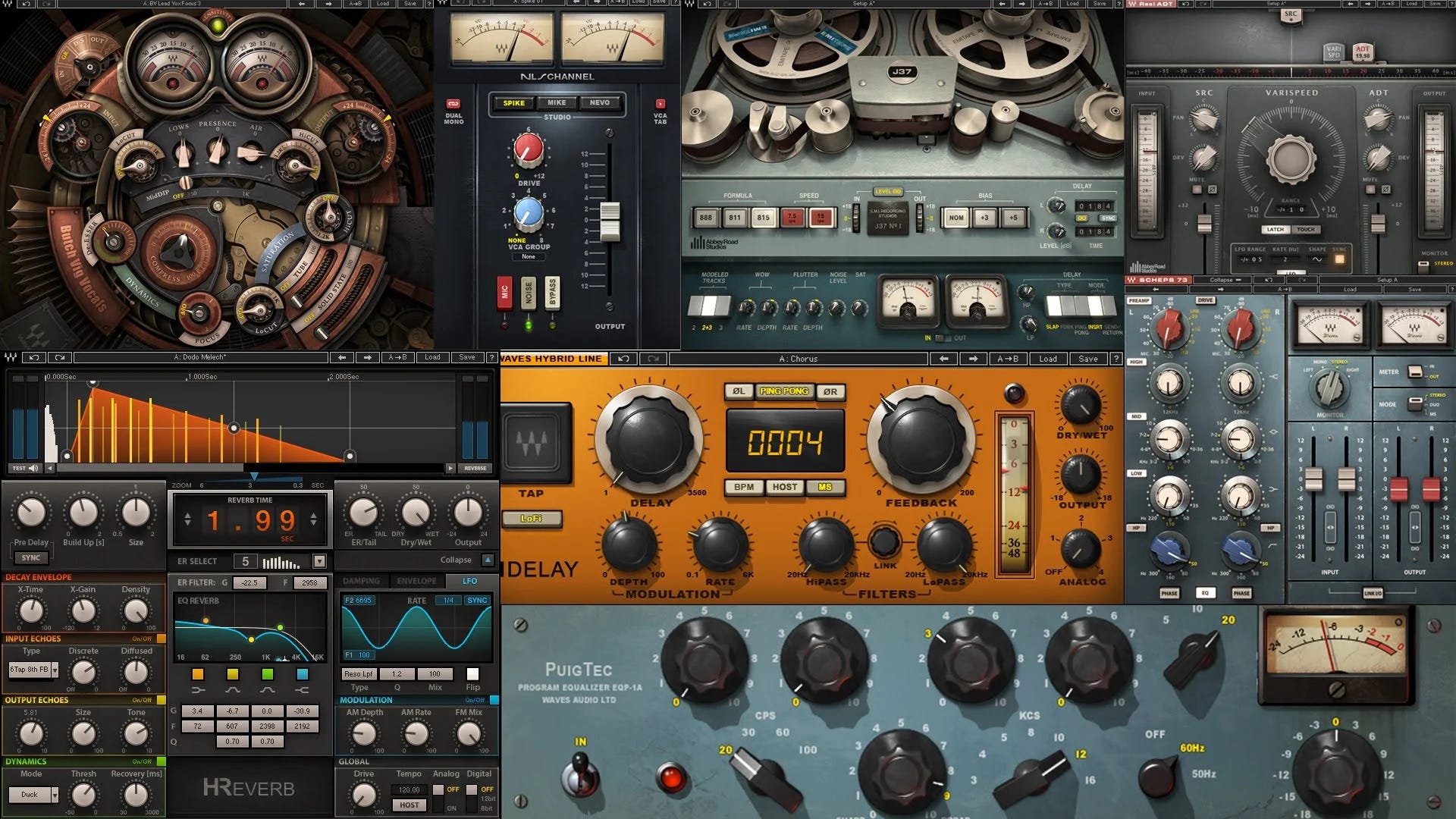
When you’re a young engineer, there’s seduction in tools. Pros show off rooms loaded with hardware worth tens of thousands of dollars, software developers entice potential buyers with sleek user interfaces, and companies that can—like Waves—offer perpetual discounts on their most popular products. One result has been the conflation of “stuff” with “skill.” A second: the explosion of the “Mix Industrial Complex.”6 Gear-acquisition syndrome has plagued musicians for as long as instruments have been sold—we all know a guy with a half-dozen guitars and zero songs to show for them—but software took it to another level.
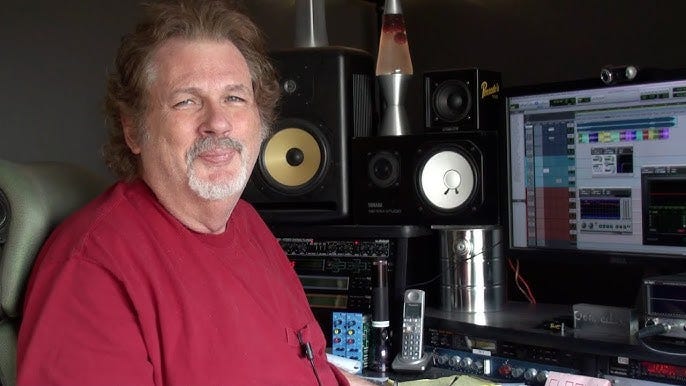
To be clear, Pensado’s Place never developed immunity to the Mix Industrial Complex. Yet, its best moments arrived in the segment ripest for the MIC’s intrusion: “Into the Lair.” In these, Dave took viewers into his studio for a fly-on-the-wall peek at his current project. No co-host, just Dave, his setup, and the camera. He explained his tricks, occasionally got lost in his own ramble, then scrolled around his most recent mix project. He adjusted levels, compared software, and, most importantly, taught that in audio, any challenge has a minimum of 1,500 solutions. Based on the colossal amount of software you could see on his computer, it would be easy to walk away with the belief that a good mix starts with good tools. But if that was the case, you weren’t really watching.
You’d find the most valuable lessons in the long silences where Dave would listen—like, really critically listen. Much of the time, those lessons had to do with intent. What does the song want to be? An in-your-face, drum-forward stomper? A glossed-up, radio-ready pop contender? Smaller than it is, subtler than a whisper? Thicker? More hollow? Or is it already near perfection? It might seem counterintuitive, but these aren’t questions that occur to the budding engineer. When you first learn that audio is its own universe, it’s easy to overcomplicate. You catch wind of “advanced” concepts like multiband compression, linear-phase response, and total harmonic distortion, plus more nebulous ones like “glue” and perceived loudness. It goes so deep that, for a while, simplicity proves evasive. Obvious fixes, like volume adjustment, seem too obvious, and so you opt for that “one weird trick” you read about on a decade-old internet forum. You don’t realize how far from the music this “knowledge” can take you until it’s nearly out of sight. Or, until you play your mix for a friend, only to realize you’ve engineered a robot where there should have been a soul.
So, how do you get back to it, to nurture the true essence of a song? Well, Dave showed us. And, as it turns out, it’s the equal-and-opposite reaction to creation: open, earnest, present reception. Which requires vulnerability—the kind you can only access with your eyes closed. And, much of the time, Dave’s were.
VII. Wisdom
Humans are naturally visual creatures, which is one of the reasons experienced engineers caution up-and-comers to avoid the urge to “mix with their eyes.” To do so is to only half listen. It’s a tougher impulse to fight than ever, thanks to the Mix Industrial Complex’s video-gamification of plug-in GUIs, but Dave resisted it by breaking the fourth wall. He’d tweak a parameter on a plug-in, find his sweet spot where the visual meter would barely flutter—right there—then flick it back to its original position.
“Hear the difference?” he’d ask the viewer.
If you were a novice, the answer was no. It was like Dave’s audio was in 4k, and the rest of us were stuck with 480p. To develop this kind of fine-grained listening skill can take years. Concepts like frequency masking, transient smear, and dynamics, for example, each require ear training. Then, to understand the roles that they can play in creating a focused whole—one with depth, contrast, and space—requires another level of proficiency. Even when an engineer understands the nitty gritty of audio, there’s still no guarantee of a great mix. They need to have the acuity of taste to make only the moves that complement the emotional quality of the music. That’s lifelong-pursuit territory. And so, to a lot of Dave’s viewers, the effects of his adjustments may have seemed imperceptible.
In those moments where you questioned your own hearing, there lived another lesson in irony: to do the most could mean doing the least. It’s one thing to take a mix from 45% “good” to 90%. But to go from 95% to 98%? That sort of challenge requires surgeon-level sensitivity, plus the wherewithal to maintain perspective—is this better, or just different? Of course, many of his viewers didn’t have the luxury of producer clients who could deliver recordings in the top 10% of quality, and thus, had a need for heavier lifting. Still, to see an expert engaged in this kind of game-of-inches puzzle offered a signpost for where, one day, we too might be.
VIII. Side B: From Atlanta to LA
At the top of the music business, opposites depend on each other. Stars play hundreds of shows per year, supported by media appearances, press runs, and brand collaborations. Top mixers, on the other hand, lead shut-in lifestyles where sunlight is a luxury. There are exceptions, of course, but, without mixers, stars’ records would have no shine. Yet, without star-level records, what is there to polish?
On the personality front, stars parlay their own, sometimes delusional, self-belief into others’ belief in them. Mixers, on the other hand, tend to suffer career-long bouts of self-doubt, uncertainty, and disappointment. Even thousands of mixes into his professional run, Dave admitted that he can listen to maybe 10 of them without cringing. So, what is it that brings these two types of people into such a codependent—yet entirely functional—marriage?
Side B offers one answer. Reading through the retrospective of Dave’s early photography and poetry makes you realize that technical aptitude is only half of what makes a mixer. In fact, maybe less. The rest is a commitment to the question: what could be?—the very same one that drives artists.
Across Dave’s early poetry, we see this reflected in his devotion to the edit. Scans of loose-leaf paper contain handwritten poems with scratched-out words, substituted lines in the margins, and unrelated drafts that curl sideways between stanzas. You get the sense that, had Dave kept up his songwriting, his oeuvre might have landed near someone like ’90s anti-folk oddball, Jeffrey Lewis’. Content aside, these poems-in-progress show a belief that would carry Dave throughout his career: what is may always become. A heavy burden, this dedication to improvement, but the foundation of his pro-experimentation stance on Pensado’s Place.
One tension that mixers must learn to accept is that no two people’s “good” sounds quite the same, yet, if a mix sounds good, it is good. These days, online opportunists and content creators lure amateurs toward a belief in “industry standards”—some baseline level of excellence that, once you crack the code, you’ve made it to the big leagues. Reality’s more complex than that. In fact, some of the best records are packaged in unconventional mixes. Take Shakira’s “Hips Don’t Lie” (mixed by Serge Tsai), for example. Seasoned engineers and punters, alike, lament a vocal that’s cranked louder than conventional wisdom might deem appropriate. “Where’s the oomph?” they wonder about the instrumental subsumed under Shakira’s voice. But, walk into a restaurant in 2026 with this on the system, and even the most philistine member of your party will look at you, point to the ceiling, and say “one of the greatest songs of all time, right here.”
The point is, subjectivity’s part of the game. None of those mix critics were in the room when the decision to push the vocal was made, and what they hear as “misguided,” the song’s team heard as complementary. Now, had Serge not had the confidence to boost the vocal, would “Hips Don’t Lie” have been the success it became? It’s hard to say, but that the mix—of all things—continues to generate such fervent discourse suggests that bold decisions, even at the mix stage, can add momentum to records. Which is why it makes so much sense that artists, the people whose opinions really matter—and she who pays the mix fee—gravitate toward engineers who have an intuition that includes the unorthodox. Like Serge. And like Dave, who would be the first to tell his “Into the Lair” viewers to strap a vocal plug-in on their rhythm section, and vice versa. You don’t need to know the rules in order to break them, but you do need to amplify emotional resonance by any means possible. That’s the type of engineer an artist wants in their corner—someone as free with their tools as a singer is with their voice.
IX. Side B: From Past to Present
Perhaps the most striking thing about Side B is the prescience of Dave’s Atlanta-era photographs. In a theme that recurs throughout his images, a lone person interacts with the broader world. Sometimes, it’s with traffic; others, with nature. Most often, though, it’s a construction worker and a mass of industry. Pipes, beams, and wires frame the subjects of these portraits, unaware that a documentarian’s camera commits them to history.
It was in this context, amid Atlanta’s booming development, that Dave began his transition from bandmember, occasional songwriter, and odd-jobs man to studio engineer. It’s not so much of a stretch to suggest that, amid his own professional transition, he felt a kinship with these construction workers, and it was reflected in his photographs. One, in particular, nods toward Dave’s future:
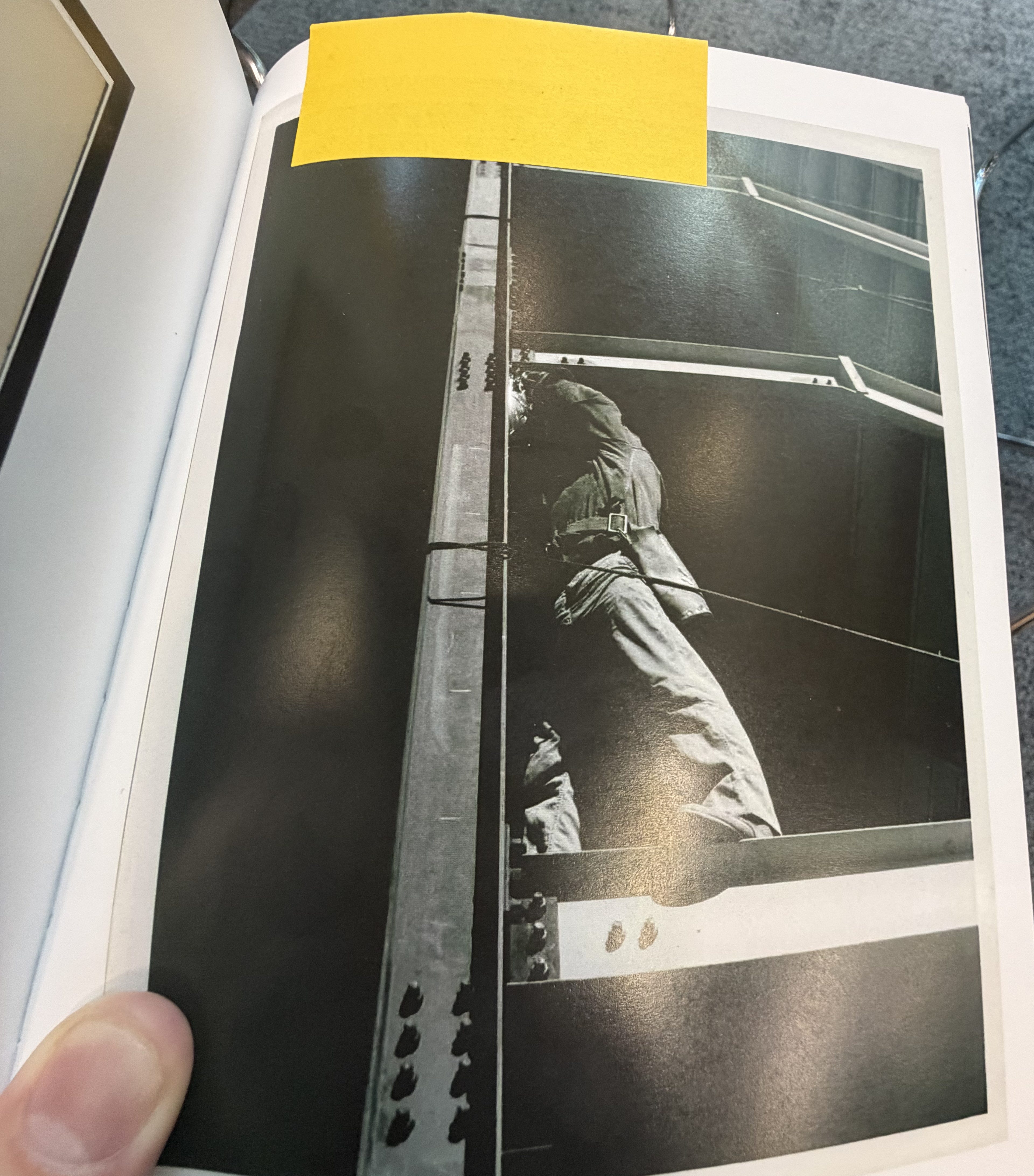
High on a scaffold, a solitary welder connects a junction of beams, generating a shower of sparks. Behind him, the interior of a building takes form. Darkness obscures the man’s face while the sun glints off of his metal framework. Out of mere individual parts, this worker makes a whole—and what the welder does with steel, the mixer does with recordings.
X. Pensado’s Legacy
When you’re a child, cars make intuitive sense. Press the gas, the car goes. Hit the brake, it slows. Only when you’re older do you realize that those two inertial pedals connect to a vast mechanical system which interlocks with itself in refined, intentional, and surprising ways. For the end user, the result is simplicity. The same is true with records. The difference, however, is that music’s complexity is invisible. Still, to see is to believe, and by making himself visible, Pensado reminded us that invisible need not mean unknowable.
In record mixing, nepo babies are few and far between. They exist, but it’s rare to claim familial lineage in this field. For much of recorded music’s history, mixing has been passed down via apprenticeship. The trajectory of the studio “teaboy”—often a young man—used to be common. His primary responsibility was to clean toilets and make refreshments. When he gained enough trust, he’d be allowed to sit in on mix sessions. If he kept out of the way, didn’t fry any gear, and refrained from killing the vibe, an engineer might promote him to assistant. Eventually, that engineer would retire, the facility would open a new control room, or work would demand fresh hands. Then and only then, the assistant would become the mixer, and the cycle could repeat. Pensado’s Place helped push that model closer to obsolescence. And, in doing so, Dave became the adoptive mix grandpa to a generation of audio kids he’d never meet.
Though hundreds—maybe thousands—of mixers could claim to be descendants of the Pensado philosophy, Dave kept traditional apprentices throughout his career. Some, like Sylvia Massey, pay it forward as educators, alongside their production, mix, and literary work. Others, like Nico Hamui—who would cameo on Pensado’s Place when he was Dave’s assistant—chart a similar path to their mentor. Others, still, lean into plug-in sales, themselves corner-office CEOs in the Mix Industrial Complex’s gilded skyscraper.
For the rest of us—those in independent music, we lone welders—Dave’s greatest legacy will be that he assured us, when it comes to mixing, the sun will always shine on the work.
*Proceeds of Side B: The Early Photographic And Literary Life Of Dave Pensado will support Dave’s ongoing Alzheimer’s care.
One famous example: “Crank That” by Soulja Boy, made with stock FL Studio sounds when the artist was just 17 years old. Look it up!
Take Ariana Grande, for example: her dexterity with Pro Tools means that, at times, she has been writer, performer, vocal producer, and recording engineer, at once.
For those interested, other industry-stalwart mixers include: Bob Power (who died during the writing of this piece), Jack Joseph Puig, Serban Ghenea (often memed online), Chris Lorde-Alge, Spike Stent, Manny Marroquin, Bob Clearmountain, Andrew Scheps, and Michael Brauer...
Who passed away during the writing of this piece.
I first became aware of this term via mastering engineer, Ruairi O’Flaherty, known professionally as Nomograph Mastering.